Hani Baloch
It is the continuation of Baloch defensive war (of sovereignty) that provokes the Baloch women to partake in war along with men to defend the nation. Baloch women, whenever dragged into a war, fought the best.
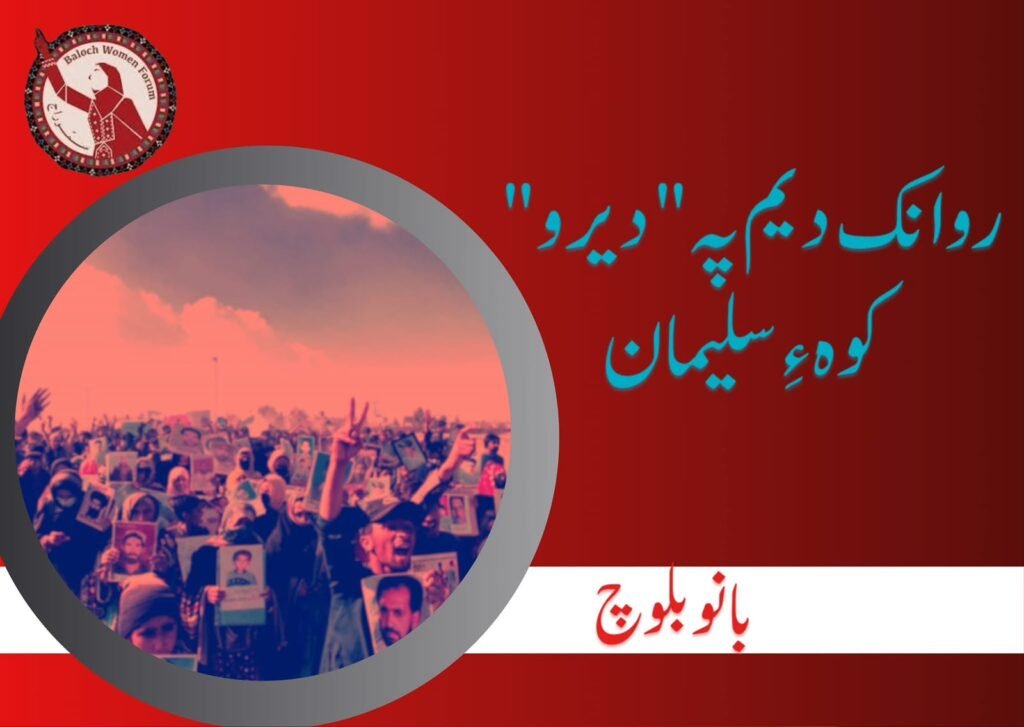
The new era of Baloch resistance made the Baloch women lead the colonial war, whether on roads for the recovery of their missing persons or any aspect of life to conquer oppressors. But such leading and unsung women have been the biggest target of the trolls, as trolling is the only way left for such people to bring their undying morals down.
Baloch women’s struggle and activism is not something new but it is embedded in the region’s historical past – from Banadi Rind, Bibi Gul, Mahnaz to Lumma Karima and every Baloch woman. Until then, the resistance will continue to the prescribed destination.
The Baloch women have long been at the forefront of the struggle against enforced disappearances in Balochistan, a region plagued by political turmoil and human rights violations. Enforced disappearances, where individuals are taken into custody by state authorities or affiliated groups without acknowledgement or accountability, have become a weapon of terror in the Baloch nationalist movement.
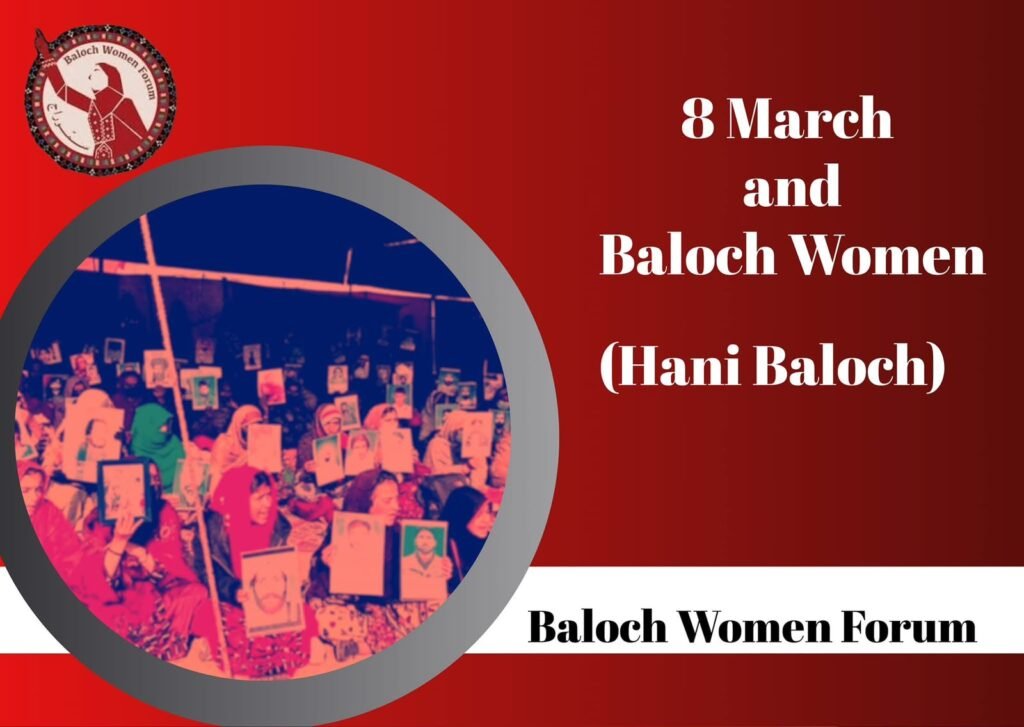
The Baloch women, despite being subjected to various forms of oppression and violence themselves, have shown tremendous resilience and courage in demanding justice for their loved ones who have disappeared. They have formed advocacy groups, organized protests, and raised their voices against the atrocities committed by state forces.
According to international media reports, Pakistan has been involved in enforced disappearances in Balochistan for the past 20 years. According to Amnesty International, enforced disappearances, targeting students, activists, journalists and human rights defenders, continue relentlessly in Pakistan’s southwestern province of Balochistan. People are wrenched away from their loved ones by state officials or others acting on their behalf, placing them outside the protection of the law. The authorities then deny the person is in their custody or refuse to say where they are.
Families of the disappeared are plunged into a state of anguish, trying to keep the flame of hope alive while fearing the worst. Many have been in this limbo for years and months, whereas, violence against Baloch women protesters erupted. Women were seen manhandled and arrested by police, but there was hardly any coverage from Pakistan’s mainstream media. Their peaceful protests were disrupted and then suddenly put to a violent end.
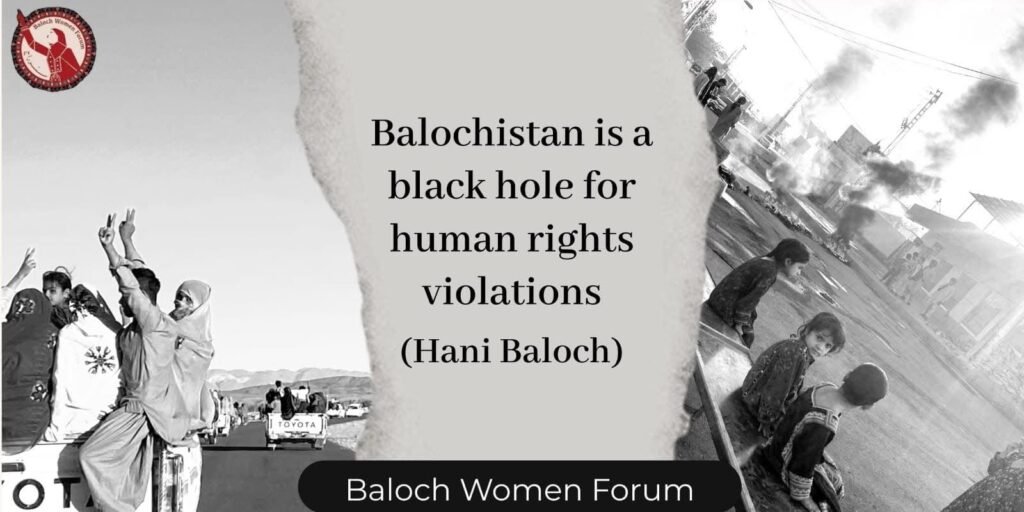
Sammi Deen Baloch, who is the General Secretary of Voice for Baloch Missing Persons (VBMP), along with other victimized families of missing persons, was among the activists who became victim to police brutality whilst protesting in Karachi. While recently, Hani Baloch was murdered in Iran with burning her body with acid to hide the torture signs during her disappearing tenure.
Legal reforms are important steps that we miss in Balochistan, particularly if they were paired with targeted resources and training for law enforcements. Ensuring that all women political leaders and activists can engage in democratic processes without fear of harassment, threats and abuse can be a central piece of this struggle that Baloch women are deprived of.
An important and much-needed change must be in legal reforms in relation to women’s protection from violence, family law, and political participation. Other positive changes should include providing services to women in need, including shelters, legal representation, advocacy, and skills development; challenging the dominant gender discourse through the development of gender studies, trainings, and media engagements; and more visibility for women’s issues in neglected Balochistan with a higher level in the public sphere such as the case of human crisis of enforced disappearances in Balochistan.
In effect, these criticisms dim the energy of frontline activists who are bearing the brunt of state’s brutal genocidal system which provides an opening for conservative and patriarchal backlash, and make no constructive contributions to the debate that is burning our land with dripping blood.
If we do not always succeed, it is not because we misunderstand struggles of Baloch women, nor is it because we are not resourceful or smart enough to fight. It is because of the resilient patriarchal and monopolized state’s system that fights us back in visible and invisible ways.
Many Baloch women rights activists have spent years of their lives working in difficult and challenging circumstances, critiquing the authorities and parties, and supporting vulnerably the other victimized women. They fought the system that adapts itself after major socio-political changes and finds new ways to victimize women and fight activists who are fighting for their own land for their loved ones. These women work hard for little and no compensation and no appreciation, but merely for the safe release of missing persons. They have no pension and no holidays, neither money. They are not responsible for these crimes which they are being punished of and they should not be blamed for the system’s deficiency in providing security and rights to women.
Achieving the aims and struggles of Balochistan, including the gender equality, is not the responsibility of only organizations and forums, and activists alone. It will not be possible without the engagement of the larger community either. An effective approach necessitates coordinated responses from the whole nation and the larger community is needed.